
COMMERCIAL ROOFING SPECIALISTS.
Commercial roof decisions backed by evidence.
Roof Man Intelligence combines inspection, aerial imagery, thermal data, 3D modeling, QA, and lifecycle records so owners can understand condition before they commit capital.
DATA. INSPECTION. INSIGHT. RESULTS.
OUR SERVICES
One roof intelligence system. Five ways to deploy it.
Use individual services when the question is narrow, or combine them when the building needs a complete condition picture.

Roof Man Scope™
Document roof condition, deficiencies, priorities, and decision pathways with direct field verification.
Explore Scope™ →
Roof Man View™
Create a repeatable aerial record with organized imagery, orthomosaic mapping, and visual context.
Explore View™ →
Roof Man Scan™
Identify thermal patterns that warrant verification and connect them to roof history and field evidence.
Explore Scan™ →
Roof Man Model™
Build a measurable three-dimensional representation for visualization, planning, and documentation.
Explore Model™ →
Roof Man Complete™
Combine the core Roof Man Intelligence services into one coordinated commercial roof assessment package.
Explore Complete™ →Thermal + Visual Documentation
One roof. Two perspectives. Better decisions.
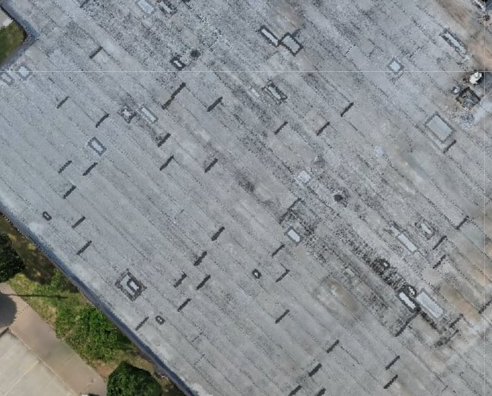
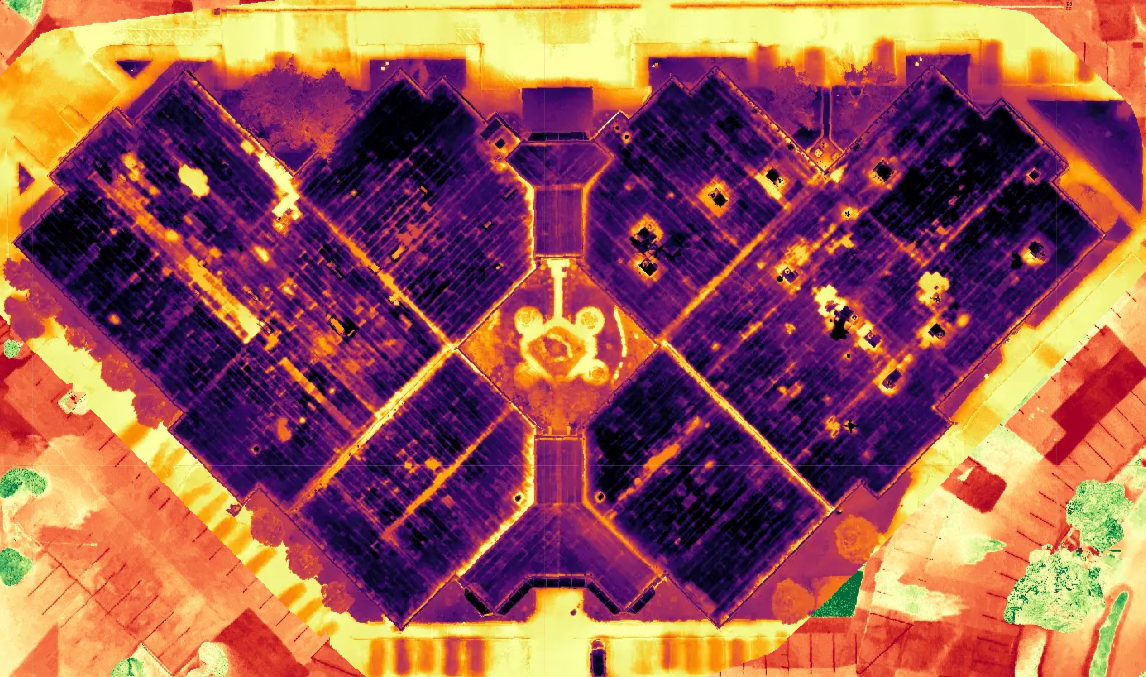
Visual drone imagery records surface conditions. Thermal imagery from the same location may reveal temperature patterns that warrant field verification. Move the slider to compare the registered images.
Schedule a Thermal Roof Evaluation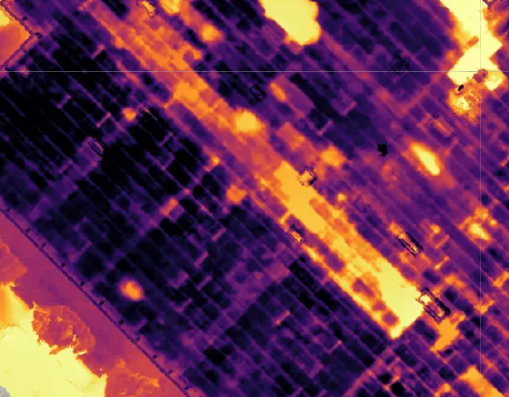
THE INSPECTION PROCESS
From roof question to owner-ready intelligence.
The technology changes by project. The discipline does not: define the question, capture the evidence, QA the output, and preserve the record.
01Define
Property, Roof Section, decision deadline, known history, and required outputs.
Answer a question +
Define
Property, Roof Section, decision deadline, known history, and required outputs.
A useful inspection starts with the owner decision, not the tool. We define the property, permanent Roof Section, deadline, known history, and the information needed before capture begins.
Read the owner guide →02Inspect
Field observations and direct verification where the selected service requires it.
Answer a question +
Inspect
Field observations and direct verification where the selected service requires it.
Aerial and thermal evidence can narrow the question, but roof construction, details, defects, access, and suspected moisture often require direct field verification.
Read the owner guide →03Capture
Aerial, thermal, model, photographs, notes, and measurements organized as evidence.
Answer a question +
Capture
Aerial, thermal, model, photographs, notes, and measurements organized as evidence.
Repeatable maps, thermal imagery, photographs, notes, and measurements create context. Each capture method is selected because it answers a defined question—not because the technology is available.
Read the owner guide →04Process
Mission data becomes maps, imagery, models, and structured inspection records.
Answer a question +
Process
Mission data becomes maps, imagery, models, and structured inspection records.
Mission imagery is processed into usable orthomosaics, visual references, models, and structured records so the evidence can be reviewed, compared, and preserved.
Read the owner guide →05QA
A consultant reviews the evidence before findings or deliverables become customer-facing.
Answer a question +
QA
A consultant reviews the evidence before findings or deliverables become customer-facing.
A thermal pattern is not automatically wet insulation and an image is not automatically a finding. Consultant QA checks the evidence, limitations, and wording before anything becomes customer-facing.
Read the owner guide →06Deliver
Reports and approved outputs move into Roof Man Vault™ and remain connected to the Roof Section.
Answer a question +
Deliver
Reports and approved outputs move into Roof Man Vault™ and remain connected to the Roof Section.
The useful result is not a folder of disconnected files. Approved reports, maps, evidence, findings, repairs, and later verification remain connected to the permanent Roof Section history.
Read the owner guide →TECHNOLOGY WITH A PURPOSE
Tools are useful only when they answer a roofing question.
Drone mapping, thermal imagery, 3D photogrammetry, structured findings, and permanent lifecycle records are used as parts of one consulting workflow—not as disconnected gadgets.
High-resolution visual documentation What does it add? +
A repeatable aerial record gives the owner context across the whole roof instead of isolated photographs. It is especially useful for mapping conditions, comparing later inspections, and communicating locations.
When drone roof inspection is useful →Thermal anomaly review What can it prove? +
Thermal imagery shows temperature patterns—not moisture by itself. Useful interpretation depends on weather, roof construction, timing, verification methods, and the limitations of the survey.
Thermal patterns vs. wet insulation →3D and orthomosaic deliverables When do they help? +
Orthomosaics create a map-like visual reference; 3D models add spatial context. They can support planning, measurements, communication, and a repeatable record when the required accuracy is understood.
What an orthomosaic roof map shows →Human QA before publication Why not automate it? +
Processing can organize data, but a consultant still has to decide what the evidence supports, what remains uncertain, and what wording is responsible enough to become a customer-facing finding.
What a roof evaluation should include →Secure project and lifecycle records Why keep history? +
Roof history lets later inspections start with prior findings, repairs, imagery, warranties, and unresolved questions. That turns one-time inspections into progressively better asset intelligence.
Use roof history for capital planning →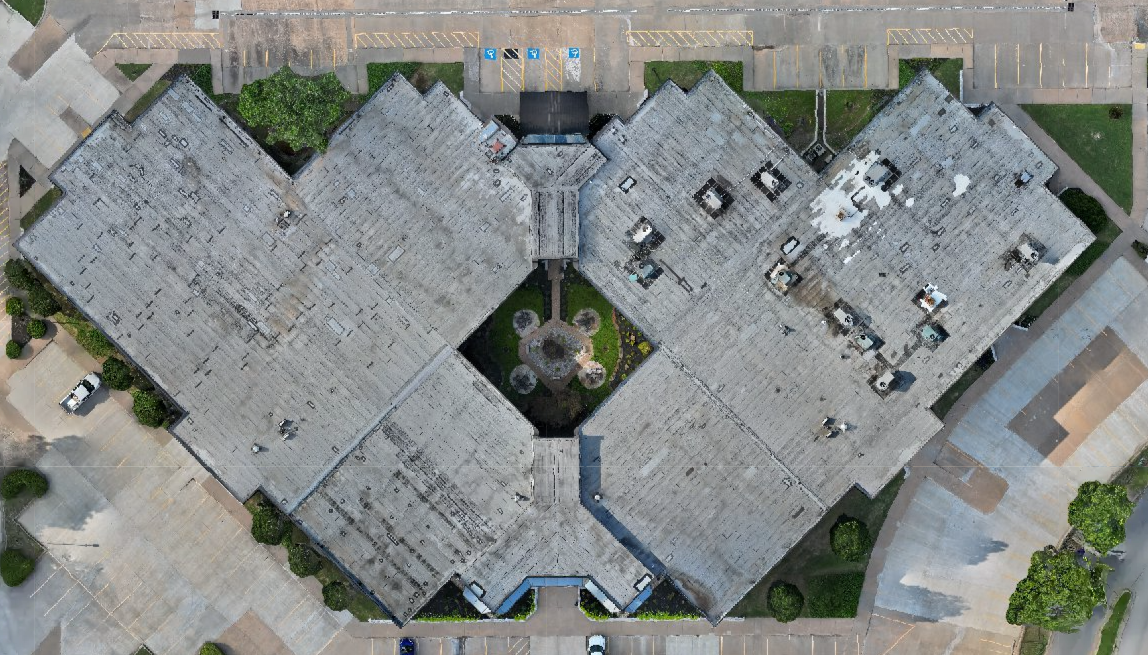
INDUSTRIES SERVED
Built around commercial property decisions—not one building type.
Manufacturing & Distribution
Large roof areas, operational risk, recurring penetrations, and capital phasing.
Owner question +
Manufacturing & Distribution
Large roof areas, operational risk, recurring penetrations, and capital phasing.
Start with access, active operations, penetrations, drainage, recurring leak zones, and the consequence of taking areas out of service. A roof plan should support phased decisions instead of treating the entire facility as one condition.
Explore this decision context →Education
Multi-building campuses, budget cycles, occupied facilities, and long-term planning.
Owner question +
Education
Multi-building campuses, budget cycles, occupied facilities, and long-term planning.
Campus decisions improve when each Roof Section has its own condition, repair history, risk, and timing. That allows funding to follow evidence instead of age alone.
Explore this decision context →Healthcare & Senior Care
Occupied, sensitive environments where documentation and coordination matter.
Owner question +
Healthcare & Senior Care
Occupied, sensitive environments where documentation and coordination matter.
Access, infection-control or operational constraints, interior sensitivity, leak consequence, scheduling, and documentation need to be defined before the inspection method is selected.
Explore this decision context →Retail & Multi-Tenant
Portfolio visibility, leak history, tenant impact, and repeatable roof records.
Owner question +
Retail & Multi-Tenant
Portfolio visibility, leak history, tenant impact, and repeatable roof records.
A repeatable roof record connects leak history, repairs, imagery, findings, and future verification so recurring issues do not disappear into work-order history.
Explore this decision context →Office & Corporate
Asset condition, due diligence, planned maintenance, and investment protection.
Owner question +
Office & Corporate
Asset condition, due diligence, planned maintenance, and investment protection.
Document present condition, known moisture risk, repair history, remaining uncertainties, and near-term capital exposure before proposals become the decision framework.
Explore this decision context →Public & Institutional
Defensible documentation, procurement support, and lifecycle accountability.
Owner question +
Public & Institutional
Defensible documentation, procurement support, and lifecycle accountability.
Structured evidence, scope clarity, documented assumptions, and permanent lifecycle records help procurement and leadership understand why work was recommended and what changed afterward.
Explore this decision context →WHY WE DO THIS
Protect the asset. Preserve useful roof life. Replace only when the evidence supports it.
Our mission is to protect the roofing assets of the clients who trust us by giving them the evidence, intelligence, and independent guidance needed to make the right decision at the right time.
We work to preserve roofs that still have useful life, prioritize repairs and restoration when they make sense, and support replacement when it is truly justified. Avoiding unnecessary tear-offs protects client capital, reduces avoidable material entering landfills, and supports more responsible decisions for the environment our children will inherit.
A roof should be replaced because the evidence says it has reached the end of its useful life—not simply because replacement is the easiest thing to sell.
Protect trusted client assetsMake capital decisions from documented condition and risk.Why? +
Both the physical roof and the owner's capital. Independent evidence helps distinguish urgent work, responsible maintenance, viable restoration, and replacement that is actually justified.
See how condition supports capital planning →Extend useful roof life responsiblyRepair or restore when evidence supports a viable path.When? +
Only when the existing assembly, moisture condition, drainage, details, adhesion or compatibility, and remaining serviceability support it. Extending life is a technical decision, not a blanket preference.
Read the restoration decision guide →Reduce avoidable landfill wasteDo not tear off serviceable roofing simply because replacement is familiar.How? +
No. It means avoiding unnecessary replacement. When the evidence supports repair or restoration, preserving useful roof life can reduce waste. When condition and risk justify replacement, replacement remains the responsible path.
Compare restoration, recover, and replacement →Leave better information behindPreserve the roof history so the next decision starts smarter.Value? +
Because the next inspection should not restart from zero. Knowing what changed, what was repaired, what cost money, and what still needs verification makes every future decision more informed.
Read about multi-year roof planning →WHY OWNERS USE ROOF MAN INTELLIGENCE
Know more before spending more.
Roofing decisions often arrive as proposals before the owner has an independent picture of condition, risk, scope, or alternatives. Our job is to build that picture first.
Start a Roof Evaluation01Independent perspective
Recommendations are built around the roof and the owner's decision—not around selling a roofing system.
Ask why +
Independent perspective
Recommendations are built around the roof and the owner's decision—not around selling a roofing system.
The starting question is what the roof needs and what the owner must decide. A contractor proposal may still be the right construction solution, but it should not be the only source defining condition, alternatives, or scope.
What an independent roof consultant does →02Connected evidence
Findings, photographs, maps, models, and history remain connected instead of becoming disconnected files.
Ask why +
Connected evidence
Findings, photographs, maps, models, and history remain connected instead of becoming disconnected files.
A report is a snapshot. Connected evidence lets the owner trace a finding back to imagery, compare later inspections, connect repairs, and understand whether the same location or defect returned.
Understand digital roof deliverables →03Scope clarity
Owners can move toward repairs, restoration, bids, or capital planning with a documented technical baseline.
Ask why +
Scope clarity
Owners can move toward repairs, restoration, bids, or capital planning with a documented technical baseline.
Because contractors may price different quantities, assemblies, assumptions, alternates, exclusions, and risk. A defined technical baseline makes it possible to compare what is actually included—not just the bottom-line number.
Questions to ask before accepting a proposal →04Lifecycle memory
The permanent Roof Section preserves what changed, what was repaired, and what needs verification next.
Ask why +
Lifecycle memory
The permanent Roof Section preserves what changed, what was repaired, and what needs verification next.
Future inspections can start with prior findings, repairs, spend, warranties, and unresolved questions. That improves trend recognition and helps ownership plan work across years instead of reacting one leak at a time.
Build a multi-year roof capital plan →NATIONAL REACH. OKLAHOMA ROOTS.
Start with the roof question. Build the evidence from there.
Tell us what is happening, what decision is approaching, and what you need to know before you commit.
Schedule a Roof Evaluation